Every fashion brand that produces in Asia knows Chinese New Year is coming. It is on the calendar a year ahead, and it still catches planning teams out every winter. Orders placed in December and January land weeks later than their lead time promised, the first spring deliveries slip, and the reorders meant to cover February sales arrive in March.
The problem is rarely that nobody knew about the holiday. It is that the lead time used to plan the order did not know about it. A supplier's lead time is a number, often something like forty days of production plus the transport, and that number is the same whether the production window runs through a quiet month or straight through a factory that is closed for two and a half weeks.
This article is about closing that gap: how a Chinese New Year factory closure, or any other, affects the purchase order, how to work out which orders they hit, and how to build the closure into the lead time instead of discovering it when the delivery date moves.
Chinese New Year 2027: what to expect
Chinese New Year 2027 falls on Saturday 6 February. The official public holiday is about a week, but the impact on production is much longer than that.
- **Factories close for longer than the holiday.** Many close a week or more before New Year and reopen one to two weeks after it. Two to four weeks without production is common. - **Capacity comes back slowly.** Workers travel home for the holiday, and not all of them return to the same factory. It can take several more weeks before output is back to normal. - **The weeks before are crowded.** Every brand tries to get goods finished and shipped before the closure, so production lines, inspection slots and freight space are all under pressure in December and January.
The exact dates vary from factory to factory, so the most useful thing a planner can do in the autumn is ask each supplier for its own closure dates and write them down somewhere the planning actually reads them.
It is not only Chinese New Year either. The same thing happens around the Golden Week holiday in China in early October, around Eid in Bangladesh, Pakistan and Turkey, and during the long summer holidays in European factories, where August can be largely lost in Portugal and Italy. Any factory that closes for weeks at a time has the same effect on the lead time.
Why a fixed lead time gets closures wrong
A supplier lead time in planning is usually split into two parts: production days at the factory and transport days to your warehouse. The production lead time is where closures hurt, because a factory that is closed is not producing.
Take a supplier with 40 days of production. An order placed in October has a production window running through November and early December. Forty days later, the goods are finished. The same order placed in early January has a production window that runs straight through the New Year closure. If the factory is closed for 16 days in that window, the goods are finished 16 days later than the lead time said, and every date after that moves with it: departure, arrival, and the week the stock is available to sell.
Nothing in a fixed lead time captures that difference. Both orders show the same 40 days. The planner either remembers to add the closure by hand, which works for the one supplier they are thinking about this week, or they find out when the supplier confirms a later delivery date.
There is a subtle point here as well. Pushing the end of production out can make the window reach a second closure that it would otherwise have missed. An order whose 40 days would have finished just before a closure is not affected by it. The same order delayed by an earlier closure might now run into the next one. The closure days have to be counted against the extended window, not just the original one.
Working out which orders are affected
The orders to worry about are the ones whose production window overlaps a closure. In practice that means working backwards from the closure:
1. **List the closure periods per factory.** Not per supplier, where one supplier runs several factories, but per factory, because that is where the production happens. 2. **Find the production window of each open decision.** For an order placed now, production starts shortly after the order and runs for the production days of that factory. 3. **Check the overlap.** If the window touches a closure, add the closed days to the production time. Then check the extended window again, in case it now reaches another closure. 4. **Look at what that does to availability.** A later arrival only matters if it changes when you run out. For a NOOS (never out of stock) product with healthy cover, two weeks may not matter. For a style with a sharp spring peak, it can decide whether you have stock when the season starts.
Doing this by hand across a whole range is a lot of work, which is why it tends to happen only for the biggest orders. The cost of skipping it shows up in the smaller ones.
What to do before the closure
Once the affected orders are visible, the decisions are fairly practical.
**Order earlier where it matters.** For products that would otherwise land after their selling window, bring the order forward so the production finishes before the factory closes. This is the most common fix, and it is only possible if you spot it in November rather than January.
**Accept the delay where it does not.** Some products have enough stock or a flat enough demand that a later arrival is harmless. Knowing which ones means you do not spend the factory's scarce pre-holiday capacity on them.
**Talk to the supplier about splitting.** A part delivery before the closure and the rest after can protect the first weeks of a season without forcing the whole order forward.
**Plan the first weeks after New Year carefully.** Reorders on proven sellers that would normally be placed in January may need to be placed in December, or covered by more stock going into the holiday.
**Keep air freight as a decision, not a reflex.** When production finishes late and the season is waiting, flying the goods is tempting. Sometimes it is right. It is cheaper to decide that with the numbers in front of you than in a hurry in March.
How Fashion Planner handles factory closures
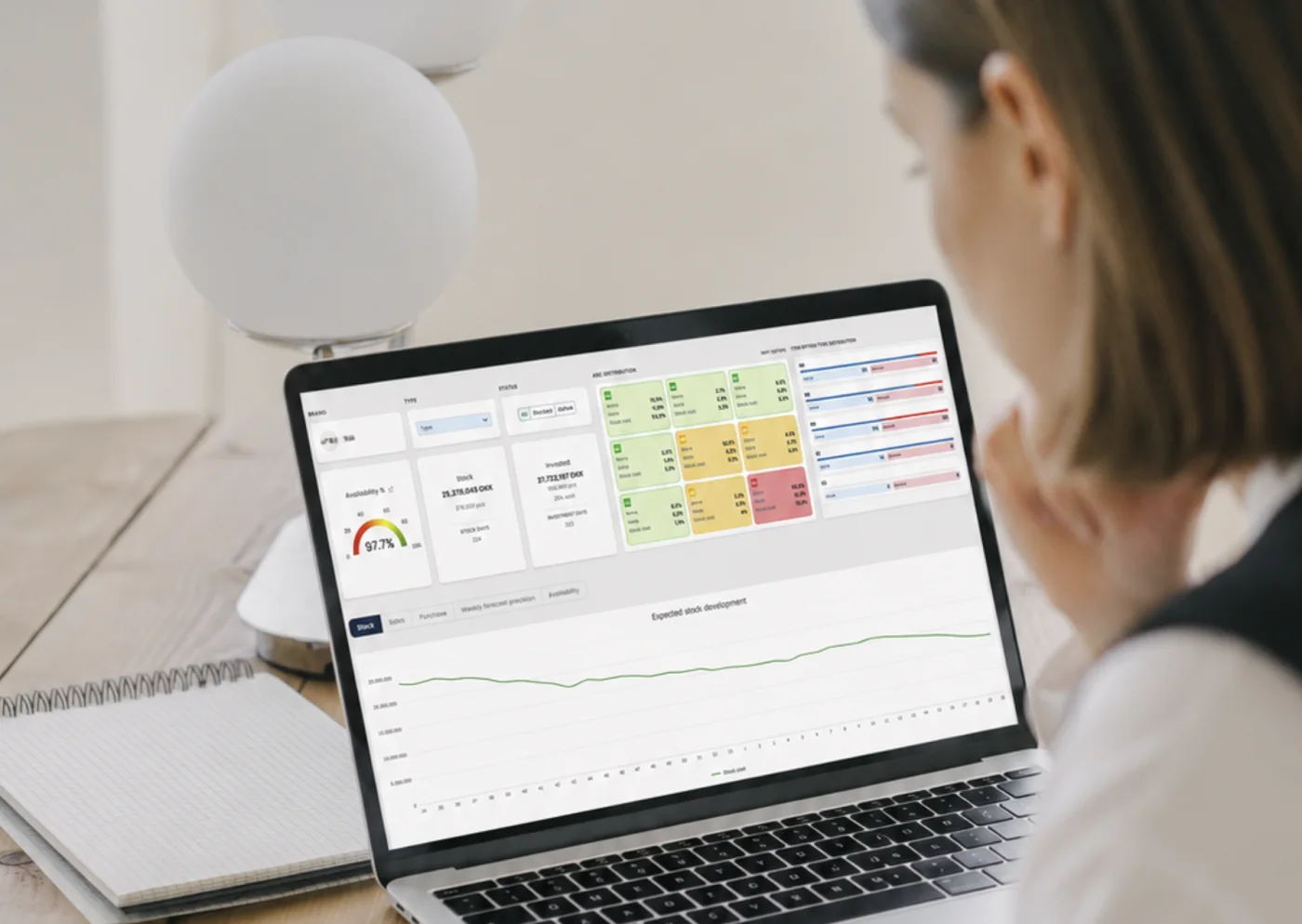
Fashion Planner now treats factory closures as part of the lead time.
On the **Suppliers** page in master data, every sub supplier, which is the factory that produces the goods, has a **Closure** column. There you register the periods that factory is closed, with a reason such as Chinese New Year or a summer holiday. A badge shows when a factory is closed right now or soon, and the history shows who changed a period and when.
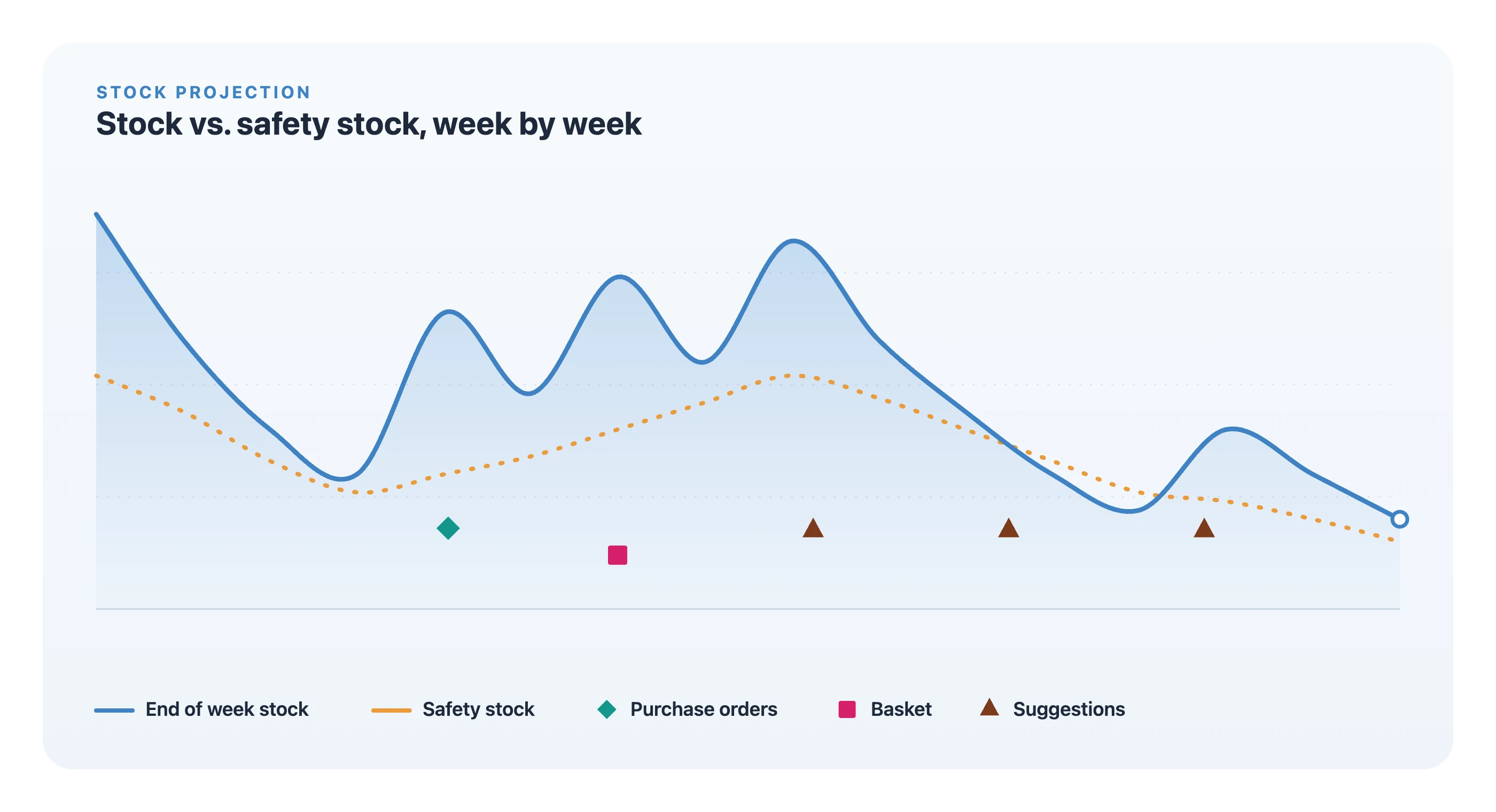
The closed days are then added to the lead time of the item options made by that factory, everywhere the lead time is used: the order suggestions, the earliest possible arrival in the item planning matrix, the tiles on Your assistant, the basket and the order basis. A closure counts when it falls inside the production window, and the extended window is checked again, so a second closure it reaches counts too.
The Leadtime tile on the item spells it out, for example **Prod: 40 + 16**: 40 days of production plus 16 days of factory closure. Hover it to see the closed days, and the Production card on the item lists the closures that are coming up. When you save or delete a closure, the affected item options are recalculated, so the suggestions follow straight away.
The point is that the closure is registered once, by whoever talks to the supplier, and then every order decision takes it into account, including the ones nobody was thinking about that week. You can read more about how the lead time drives the plan on our inventory planning page.
Make the calendar part of the plan
Chinese New Year is the most predictable disruption in the fashion supply chain. It does not need a crisis plan; it needs the closure dates written into the lead time before the orders are placed. Do that in the autumn, check which orders run into a closure, and the decisions about what to order early, what to split and what to leave can be made calmly in November instead of urgently in February.
If you would like to see how your open order decisions look with your suppliers' closure periods built in, request a demo and we will show you with your own data.