Ask a wholesale fashion brand how a style is selling and the answer usually comes by country. Germany is up, the Netherlands is flat, Denmark is behind. It is the split every ERP can produce, because every customer has a country, and it is the split most sales reports and planning meetings are built on.
The trouble is that country is rarely what drives how a customer buys. A department store chain, a small independent boutique, a store that buys through a buying group and an online pure player can all sit in the same country and behave completely differently. Add them together and the country number describes none of them.
This article is about the other way to read wholesale demand: by customer group and customer type. Why it matters, where it changes planning decisions, and what to watch for in your own data before you rely on it for demand forecasting.
Why country is the default, and why it is not enough
Country is the default because it is always there. It is on the invoice, it lines up with sales agents and showrooms, and it is how sales targets are often set. For a sales team that thinks in territories, it is the natural view.
For planning, it mixes things that should be kept apart:
- **Different order patterns.** Large chains place big orders early and few reorders. Independent stores order smaller quantities and come back during the season. The same country total can be one or the other, and the reorder potential is very different. - **Different reliability.** Some customer types cancel more, or take only part of what they ordered. Others always take the full order. A forecast that treats them the same overestimates one and underestimates the other. - **Different reasons to buy.** An order from an off-price or outlet buyer at the end of the season is not demand you want to plan the next collection on. In a country report, it looks like any other sale.
A country split tells you where the goods went. A customer split tells you who bought them, and that is closer to why.
Buying groups and customer groups
Many independent fashion retailers in Europe buy through buying groups: associations that negotiate terms, handle payment and sometimes run central ordering on behalf of hundreds of member stores. For a brand, a buying group can be one of the largest customers on paper, even though the orders come from many small shops.
In most ERPs this is captured as a **customer group**: a field on the customer that links each store to the group it belongs to. Other brands use customer groups for their own segmentation instead, such as key accounts, department stores, franchise partners or online.
Looking at sales by customer group answers questions a country view cannot:
- Which groups carry a style, and which have not taken it at all? - Is a style growing because one group has gone all in, or because it is selling broadly? - When a group changes its buying, how much of the range is exposed?
That last one matters for risk. If a large share of a style's sales comes from one group, the forecast for that style is really a forecast of one buyer's decision.
Customer types and cleaning your sales history
Customer type is a related but different idea. Where the customer group says who the customer belongs to, the customer type says what kind of sale it is: wholesale, own retail, franchise, staff sales, outlet, samples, and so on. Most ERPs record it on the customer and carry it through to every invoice.
For forecasting, customer type is the most useful tool you have to clean sales history. A forecast learns from what was sold, so everything in the history is treated as demand. But not all of it is:
- **Clearance sales** to outlet or off-price buyers show up as a late-season spike that will repeat in the forecast unless it is removed. - **Sample and staff sales** are not customer demand at all. - **One-off campaign orders** from a single customer can make a quiet style look like a bestseller.
Being able to see the customer type next to each sale makes it easy to spot these and exclude them before the forecast is built. The question to ask for every large or unusual order is simple: would I want this to happen again next season? If not, it probably does not belong in the history.
Check the data before you trust it
Customer groups and types are only as good as the master data behind them, and in many ERPs that data has been maintained unevenly for years. Before you build decisions on it, check a few things:
- **How many sales have no group?** It is common to find a large share of customers in no group at all, or in a catch-all group that was created once and filled with everyone. A view that collects them in one row makes the size of the problem obvious. - **Are the groups still current?** Stores change buying groups, and groups merge. A customer group from five years ago may not reflect who the customer buys through today. - **Are types used consistently?** If staff sales are sometimes booked as wholesale, cleaning by type will miss them.
None of this is a reason not to use the split. It is a reason to look at it once with a critical eye, fix what is easy, and keep the rest in mind when you read the numbers.
How Fashion Planner helps
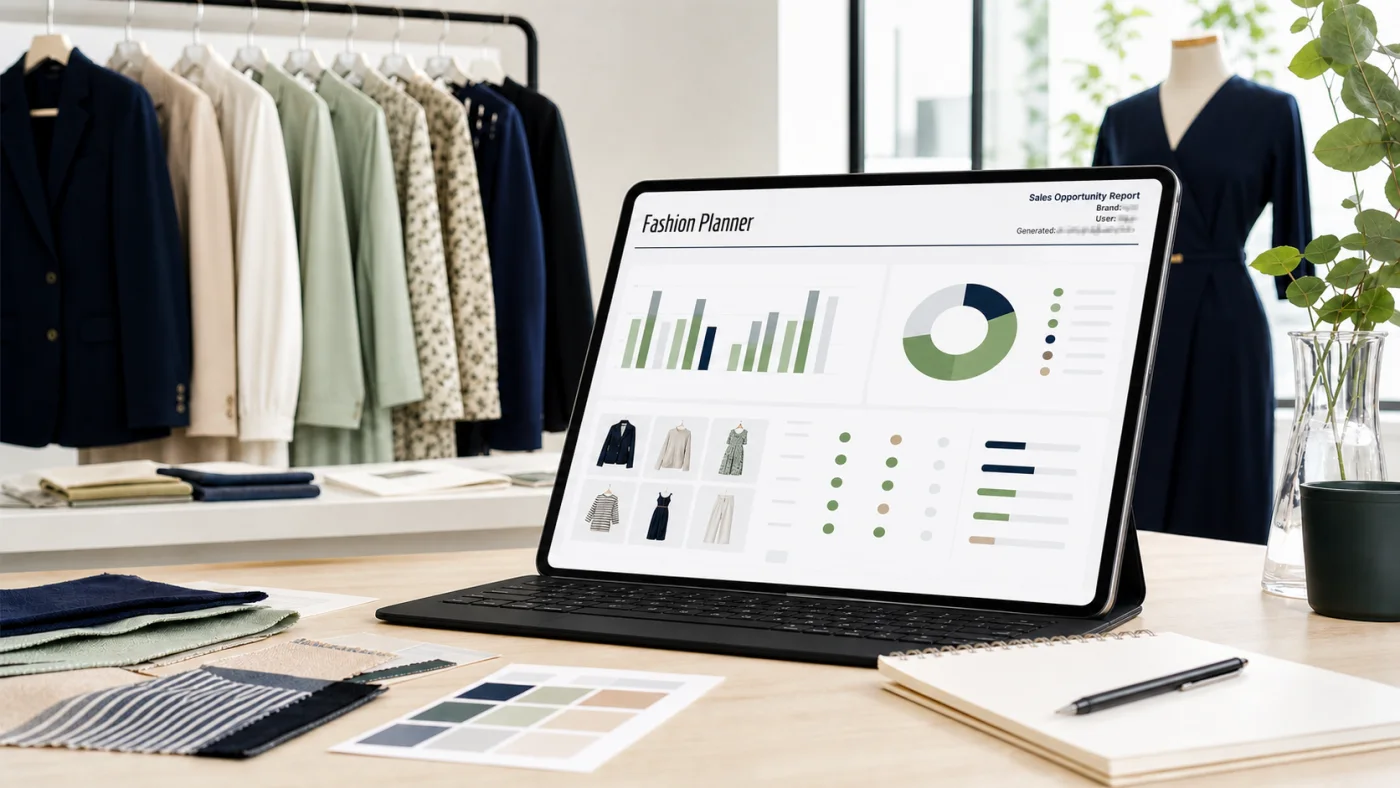
Fashion Planner now lets you read an item option's sales by customer group as well as by country. On **Item sales**, a switch on the sales table at the bottom of the page changes the first column between Country and Customer group. Customers without a group are collected under **No customer group**, so you can see straight away how much of the sales your groups actually cover.
In **Clean historic sales data**, a new **Customer type** column shows the type that each sale was booked under in the ERP. That way you can see what kind of customer an order line came from before you include or exclude it from the history the forecast is built on.
On **Item forecasting**, the wholesale details include the Customers and Customer types tabs, so the customer picture sits next to the forecast you are setting. And when your own channels matter as much as wholesale, omnichannel forecasting lets you forecast them separately and plan the purchase on the total. You can read more about the forecasting itself on our demand planning page.
Who bought it matters as much as where
The country split will not go away, and it should not. It is how sales are organised. But for planning, the more useful question is who bought the goods and why. Customer groups show where your sales are concentrated and which buyers carry a style. Customer types show which sales belong in the forecast at all. Together they make the history you plan on a better picture of the demand you actually expect.
If you would like to see your wholesale sales split by customer group, request a demo and we will show you with your own data.